Five hotel websites that don't look templated.
None of them promises "an unforgettable experience". They tell you how many rooms there are, who designed them, how to get there and who isn't welcome. Specifics are what sell the room.
You can spot an AI-built hotel website in a second: a video of a pool at sunset, "Discover your perfect escape", three cards (Rooms, Dining, Spa) and a date picker covering half the photo. It could belong to any hotel on earth, which is exactly the problem.
I went looking for the opposite: small hotels in Canada, Sweden, Spain and the US. I opened all five sites on November 5, 2026, and wrote down what they actually say, not what a design gallery says about them.
Fogo Island Inn, Newfoundland
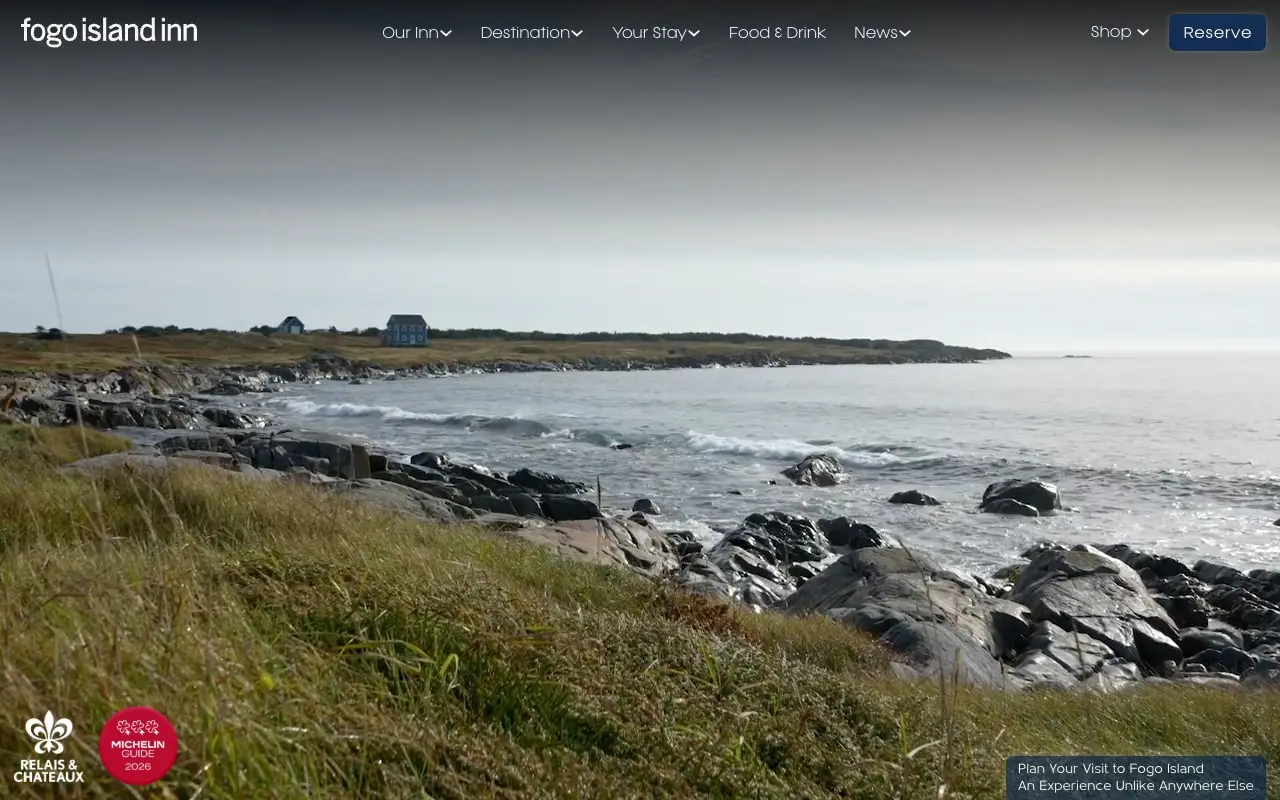
Fogo Island Inn sits on an island in the North Atlantic, and its site answers the first thing anyone wonders: how do I get there? Right in the menu, under Destination, is the closest airport with its code: Gander, YQX.
Then it gives numbers instead of adjectives: 29 rooms, full board included, and 100% of operating surpluses reinvested in the island's community.
Steal this: if getting there is hard, make the route part of the menu, with the exact detail.
Treehotel, Harads
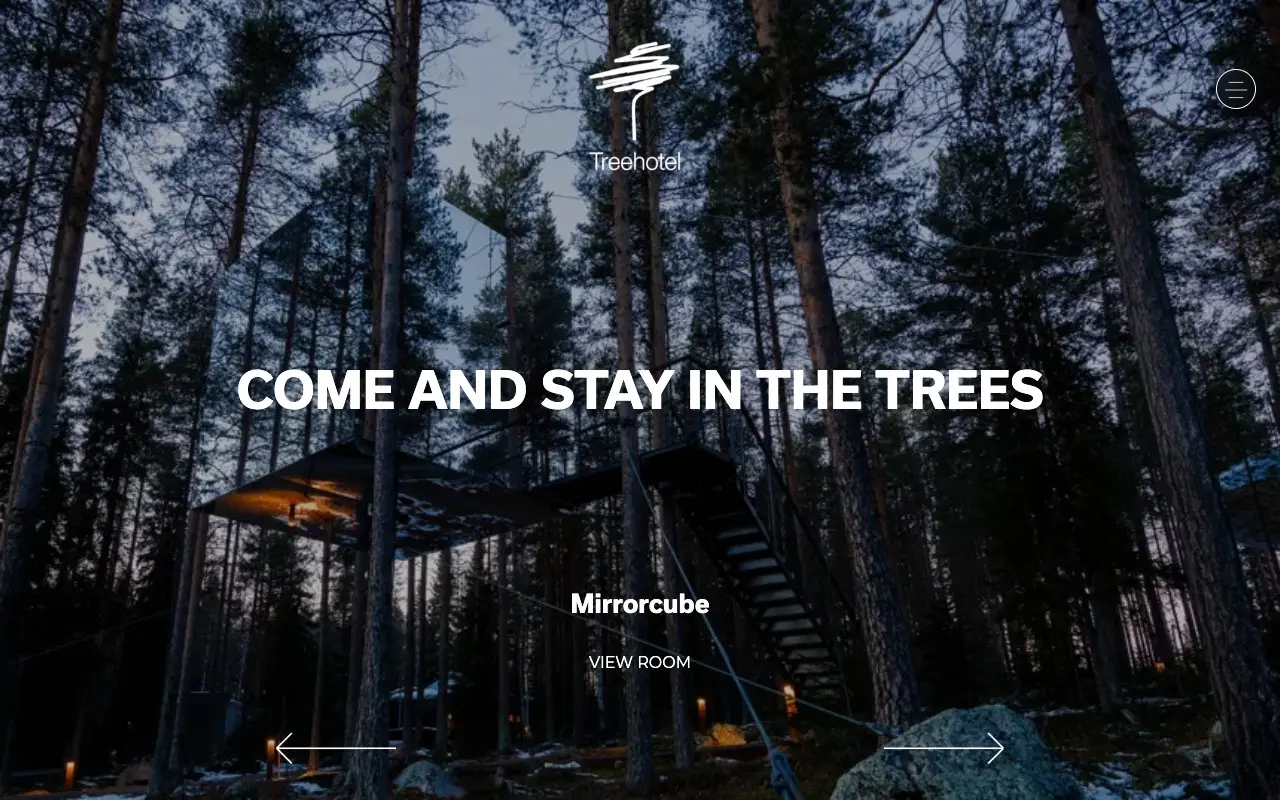
At Treehotel every room is a cabin in the trees with its own name (Mirrorcube, Bird's nest, Ufo, Biosphere), and under each one it says who designed it: Biosphere by BIG, Bjarke Ingels Group; 7th room by Snøhetta; Mirrorcube by Tham & Videgård.
It's the hotel version of naming your suppliers on a menu. A template would say "architect-designed". This site names the architect.
Steal this: if something in your place has an author, credit them right there, first and last name.
Los Enamorados, Ibiza
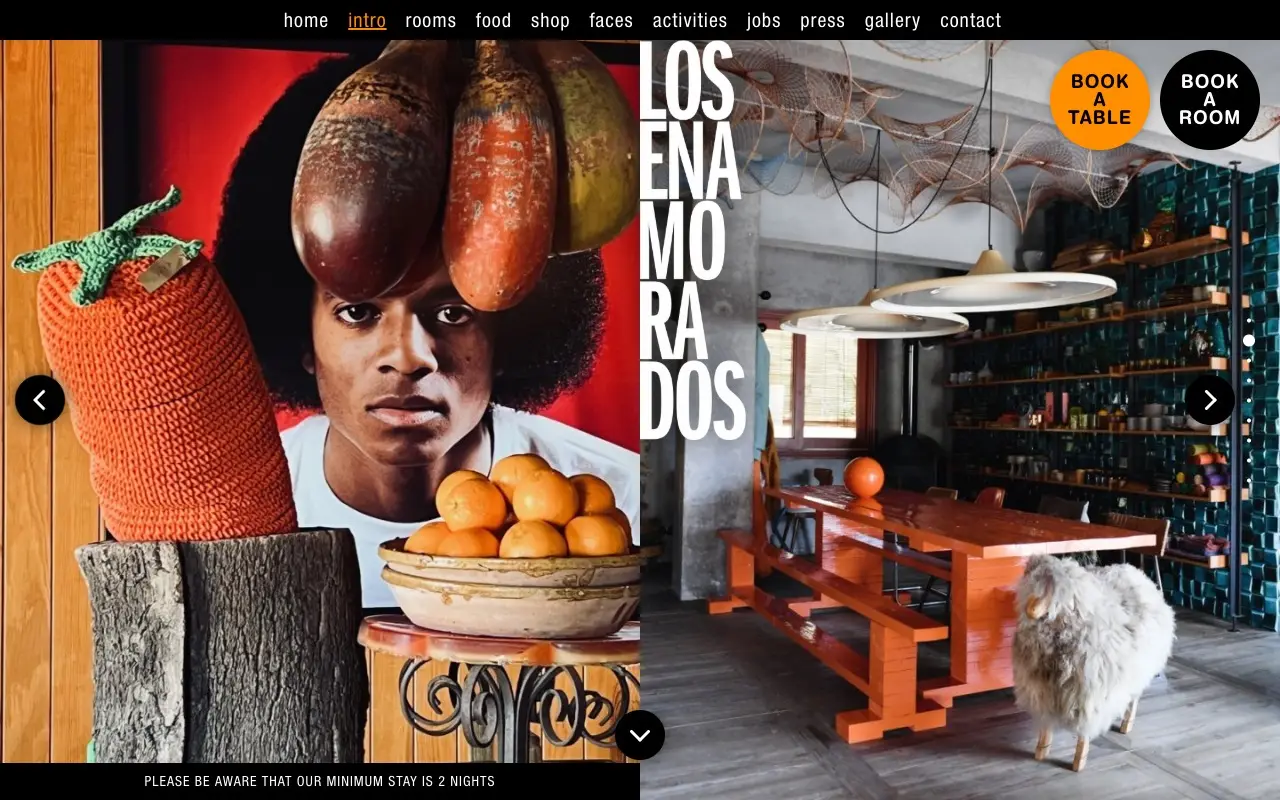
Los Enamorados is 9 rooms, a restaurant, a beach bar and a shop in Portinatx, in the north of the island. The site says so in one line, then adds what no template would: a two-night minimum, "no kids, animals, drugs and Candy Crush addicts", wifi yes, TV no.
The promise is specific too: if you can't see the sea from your balcony, you get a full refund. Every room comes with snorkels, and the massages are given by Carlos, Melanie-Jane, Greta or Kazu, by name.
Where it slips: the top says they're closed until April 2027, while further down the April 2026 reopening notice is still up. Copy with a voice still needs upkeep.
Steal this: saying who you don't want as a guest does more than any tagline.
Ett Hem, Stockholm
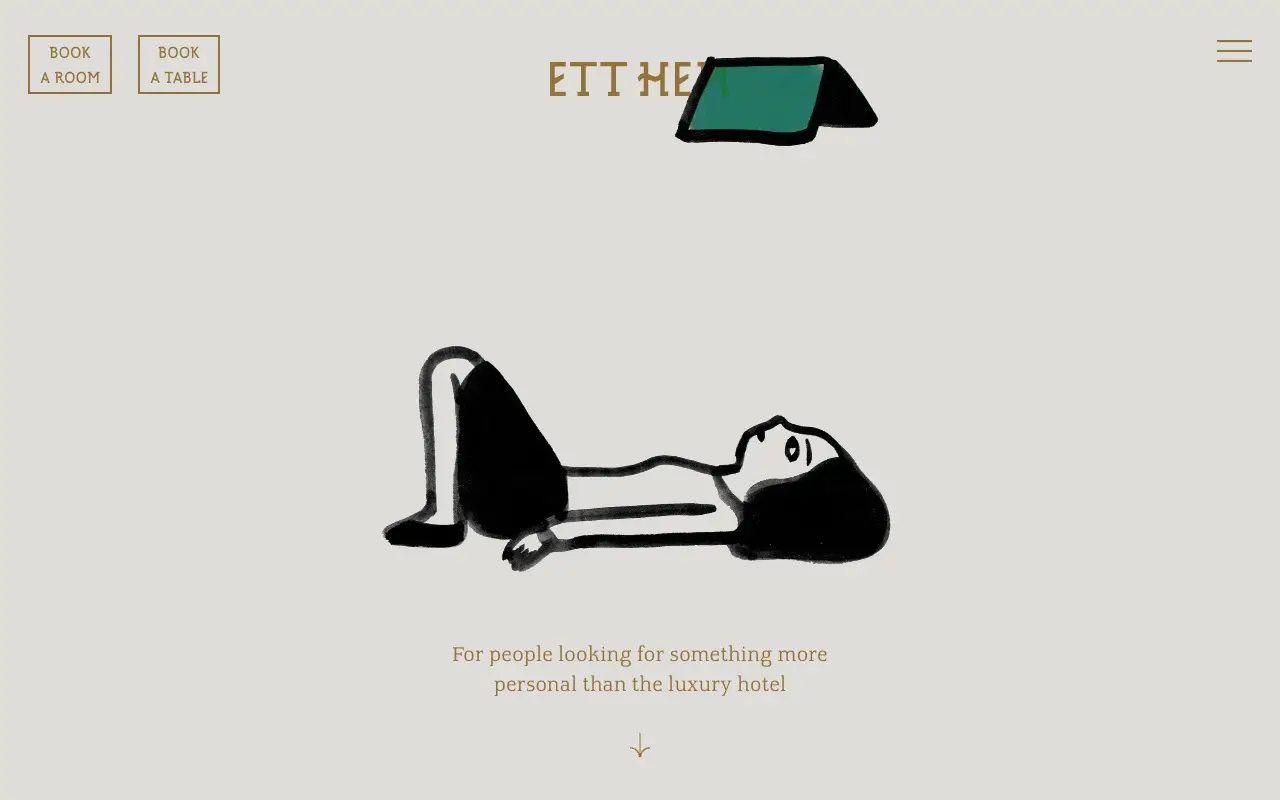
Ett Hem has five words in its menu: House, Kitchen, Wellbeing, Garden, About. Its one-line introduction says who it's for: people looking for something more personal than the luxury hotel.
Table bookings split two people a template would lump together. If you're staying there, there's always room and you just email the kitchen. If you're not, a button takes you to the booking system.
Steal this: a short menu, and a line that says who the place is for rather than how lovely it is.
Hotel Covell, Los Angeles
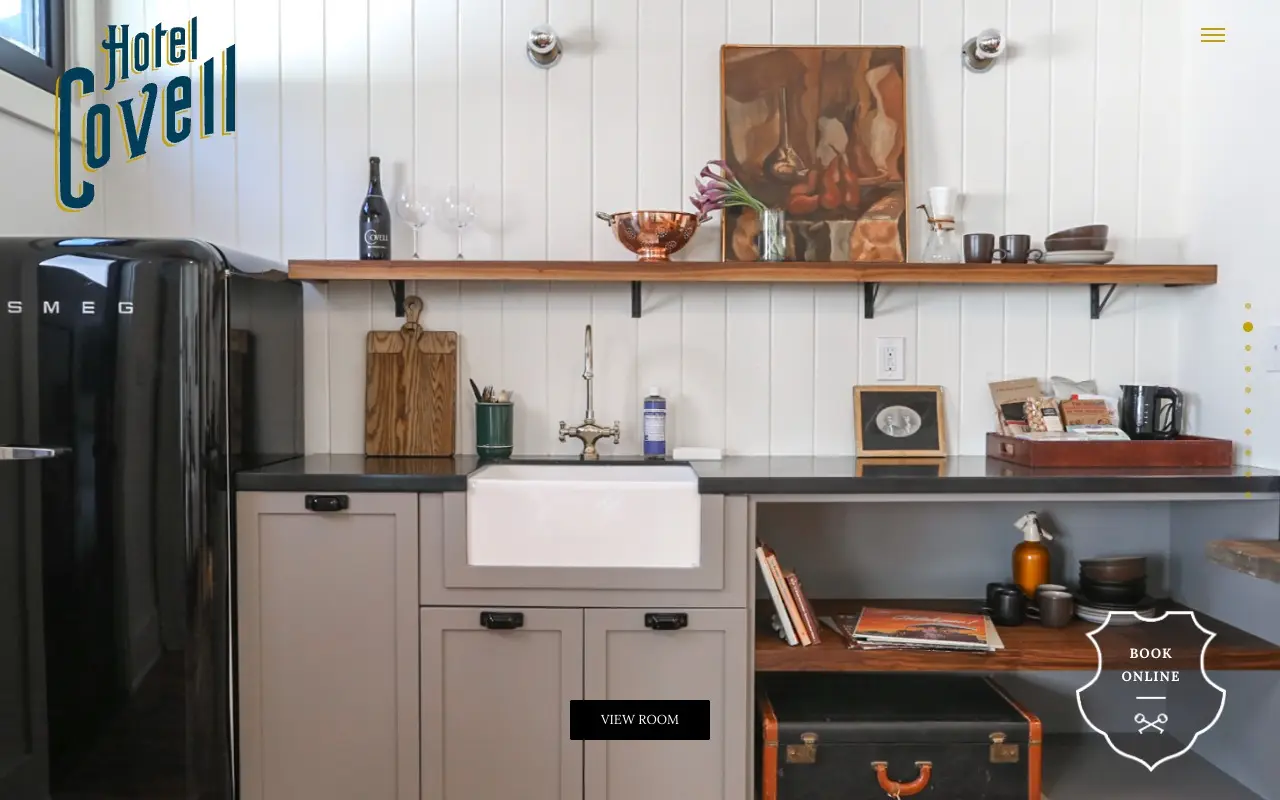
Hotel Covell presents its suites as chapters of a story: Chapter 1, Oklahoma Room; Chapter 2, 1950's NYC Flat; Chapter 3, A Parisian Atelier, all the way to the ninth. Instead of "Deluxe Suite" and "Premium Suite", each room has its own reason to exist.
Steal this: if your rooms differ, let the name say how, not just what they cost.
What they have in common
- Numbers and names instead of adjectives: 29 rooms, 9 rooms, an airport code, the studio behind each cabin.
- House rules in writing: minimum stays, who isn't welcome, what happens if you can't see the sea.
- The questions people ask before booking, answered up front: how to get there, the minimum stay, whether guests get a table.
- Short menus. Ett Hem gets by with five words.
- Standard booking engines, linked plainly. The booking engine isn't slop; the generic copy around it is.
As with restaurants, the first fix for an AI-built hotel site isn't visual: swap every adjective for a fact only you have. The guide to making your site stop looking AI-made covers the order for the rest, and the Slop Score shows you in a minute which template tells your home page has.
Frequently asked questions
What should a small hotel website include?
How many rooms there are and what they're like, how to get there, the house rules, kitchen and bar hours, and a clear booking button. All of it with your own facts, not adjectives.
How do I make my hotel website not look like a template?
Replace every sentence that could appear on another hotel's site with a fact of yours: a name, a number, a rule, an opening time. Then look at the design.